
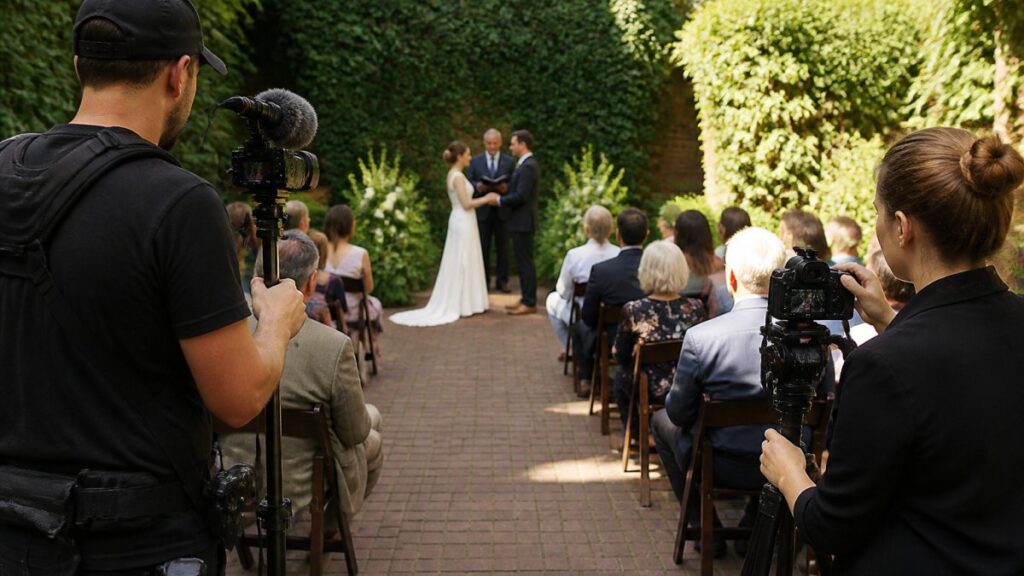
Last Updated: October 28, 2026
Quick Summary
The main wedding videography styles for intimate weddings are cinematic, documentary, and a hybrid of both. Cinematic suits scenic venues and film-style storytelling, documentary captures authentic conversation and reactions, and hybrids pair documentary audio for vows with cinematic portraits. The right choice depends on your ceremony format, venue, and guest count.
- Cinematic style uses slow motion, color grading, and music-driven edits for a film-like look.
- Documentary style follows the day with minimal direction, catching real reactions and conversations.
- Courthouse ceremonies with under 20 guests usually suit documentary coverage with one camera.
- Under 30 guests can be covered by one videographer with two cameras over 4 to 6 hours.
- Set up a wireless lapel microphone for the officiant and a partner, plus a backup recorder.
Table of Contents
- Why Intimate Weddings Need a Different Video Approach
- Cinematic Wedding Videography: Pros, Cons and Best Fits
- Documentary Wedding Videography: Pros, Cons and Best Fits
- How to Choose a Style Based on Ceremony, Location and Guest Count
- How Long Should an Intimate Wedding Video Be?
- Audio, Privacy and Guest Comfort at Small Weddings
- Questions to Ask a Wedding Videographer Before Booking
- Booking Your Intimate Wedding Video Coverage
- Frequently Asked Questions
Why Intimate Weddings Need a Different Video Approach
Choosing wedding videography styles for intimate weddings starts with one fact: a small wedding has fewer moments to capture, and each one carries more weight.
This guide walks through the main styles, who each suits, and what to ask before you book.
Intimate weddings also shift the focus. Guests are close enough to hear vows clearly, so audio matters more, and with fewer places to hide, the videographer must be present without making anyone feel watched.
Here is what usually changes at a smaller wedding:
- Audio matters more. Vows and toasts can be heard clearly, so sound quality becomes central.
- Privacy is more noticeable. Guests know each other, and some may not want to be filmed up close.
- The pace is different. A short ceremony and quiet dinner leave less room for filler.
Zola’s First Look Report on couples’ wedding planning preferences
Cinematic Wedding Videography: Pros, Cons and Best Fits
Cinematic wedding videography aims for a film-like look using slow motion, color grading, shallow depth of field, and music that builds through the day, closer to a short movie than a record of events.
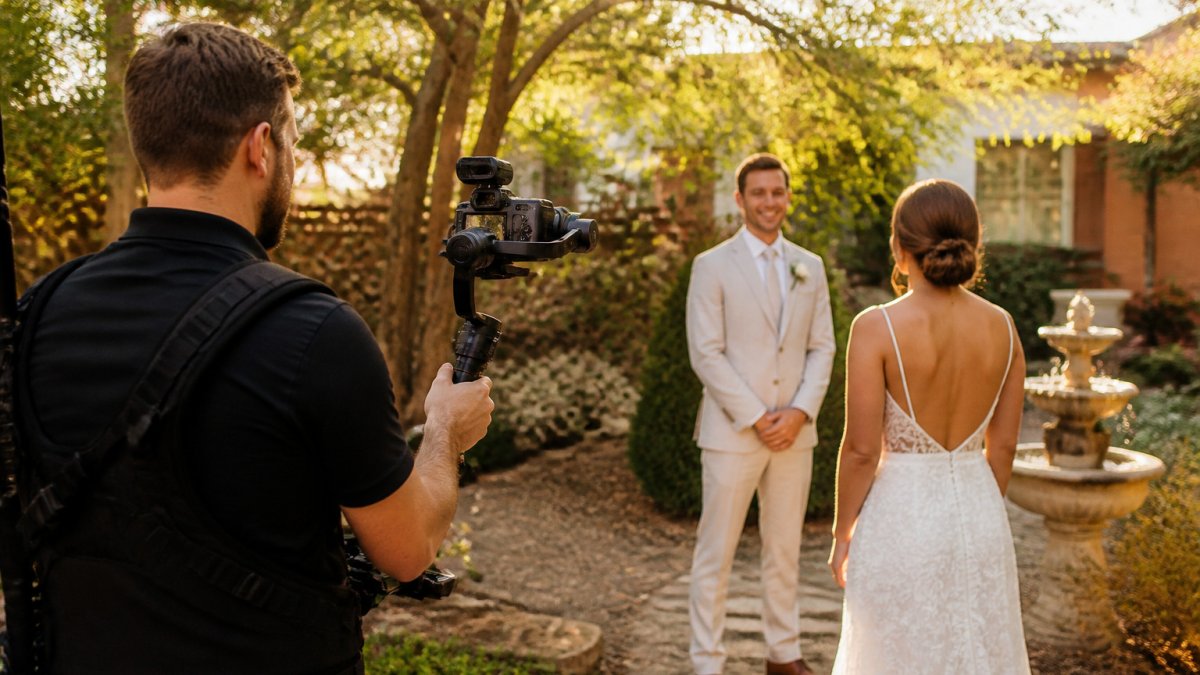
Pros:
- Strong visual style that feels polished and timeless
- Works well with dramatic locations like gardens, lakes, and historic venues
- Music-driven edits suit couples who want an emotional, cinematic feel
Cons:
- Can feel staged if the videographer directs too many moments
- Usually takes more editing time, which can affect delivery schedules
- Less suited to couples who want raw, unedited moments
Best fits: Couples with a beautiful setting, a small guest list that will not mind a more deliberate shoot, and a clear love of film-style storytelling.
A common mistake is choosing cinematic style for a very casual elopement. The polished look can clash with a relaxed, spontaneous day.
Documentary Wedding Videography: Pros, Cons and Best Fits
Documentary wedding videography focuses on what actually happened.
Pros:
- Captures authentic emotion and natural conversation
- Often less intrusive once guests settle into the day
- Useful for couples who value honest moments over a stylized look
Cons:
- Less control over lighting and framing in some spaces
- Long raw footage can take more time to shape into a short film
- Not every moment will look dramatic, which some couples dislike
Best fits: Couples who care most about hearing their guests, their family stories, and the real atmosphere of the day.
The most common surprise with documentary style is how much audio it relies on. Plan to have a clear microphone setup for the officiant and the couple, or the best moments may be hard to hear.
How to Choose a Style Based on Ceremony, Location and Guest Count
Most style guides tell you to “pick what feels right.” That is not a decision framework. For an intimate wedding, the right style is largely determined by three variables: ceremony format, venue constraints, and guest count. Prioritizing these factors ensures that your chosen aesthetic remains cohesive, especially when selecting intimate wedding venues that offer expansive backdrops for your videographer to capture.
Step 1: Map the ceremony format to a coverage approach
The ceremony format dictates how much direction is appropriate and how much audio infrastructure you need.
- Courthouse or legal ceremony (10-20 minutes, no processional). Documentary coverage with one camera and a lapel mic on each partner is usually enough. With no aisle walk or readings, a small recorder near the couple captures the vows, and cinematic slow-motion has little to attach to.
- Backyard or private-residence ceremony. These spaces are acoustically unpredictable, hard walls, HVAC noise, lawnmowers. A documentary approach with a wireless lapel on the officiant and one partner, plus a backup recorder near the front row, protects the vows. Cinematic coverage works with strong natural light and a clean background, but expect shadow management.
- Religious or traditional ceremony with processional and readings. This is where cinematic framing earns its keep: the processional, altar composition, and first-row reactions give the editor structured moments. Pair it with documentary audio so readings and vows stay intelligible.
Step 2: Read the venue for what it will and won’t allow
Ask the venue three questions before choosing a style: Can the videographer move freely during the ceremony? Is there a balcony, side aisle, or rear position for a second camera? What is the lighting at your ceremony time?
- Outdoor venues with open sightlines support cinematic coverage, one operator can move between wide establishing shots and tight reactions without blocking guests.
- Small indoor spaces (restaurant private room, chapel with fixed pews, living room) favor documentary coverage with one flexible camera and a second locked-off wide shot; cinematic movement is often impossible without disrupting the ceremony.
- Low-light receptions (candlelit dinners, string-lit patios) are the hardest environment for any style. Ask whether the videographer carries fast lenses and a small on-camera light for toasts. Documentary tolerates grain and available light better than a polished cinematic look.
Step 3: Set coverage based on guest count
Guest count is the clearest proxy for how much simultaneous activity the videographer must cover.
- Under 30 guests. One videographer with two cameras (one handheld, one locked-off wide) can cover the ceremony and key reception moments. With little mingling to capture, coverage can run 4 to 6 hours.
- 30-75 guests. Plan for one videographer with two cameras plus a second shooter for the reception, or a single videographer who prioritizes the ceremony and toasts. Coverage typically runs 6 to 8 hours.
- 75-100 guests. At this size the event behaves like a small traditional wedding: multiple conversation clusters, a fuller reception timeline, more guest reactions. A two-person crew is the practical minimum for both ceremony coverage and reception candids.
A practical pairing table
| Ceremony format | Venue type | Guest count | Recommended style |
|---|---|---|---|
| Courthouse / legal | Civic room, low light | Under 20 | Documentary, one camera, lapel mics |
| Backyard ceremony | Private residence, mixed light | 20-50 | Hybrid: documentary audio, cinematic portraits |
| Religious / traditional | Chapel or church, fixed seating | 50-75 | Cinematic ceremony, documentary audio |
| Elopement | Scenic outdoor location | 2-10 | Hybrid: documentary vows, cinematic portraits |
| Restaurant private room | Indoor, low light | 20-40 | Documentary, one camera, on-camera light for toasts |
If you are torn between two styles, ask the videographer to show you a full film, not a highlight reel, shot in a venue similar to yours. A cinematic reel cut from a sunlit garden tells you nothing about how that videographer handles a dim restaurant room with 30 guests.
A hybrid approach is common for intimate weddings, but be specific about what you want blended. “Documentary coverage of the ceremony and toasts, with cinematic portraits and a two-minute opening sequence” is a brief a videographer can price and plan. “A mix of both” is not.
How Long Should an Intimate Wedding Video Be?
Most couples receive a highlights film of about 3 to 5 minutes and a full-length edit of 20 to 40 minutes; smaller weddings often produce shorter full edits because there are fewer scenes. For a clear breakdown of how videography pricing and packages are structured, see our cost guide. Ask for sample films at both lengths before you decide, it shows how the story is paced and whether the length fits how you want to rewatch it.
wedding videography cost and package guidance
Audio, Privacy and Guest Comfort at Small Weddings
At a 200-guest wedding, room noise covers a lot of sins. At a 30-guest wedding, every word is exposed, and so is every camera. Audio and guest comfort are where intimate weddings diverge most sharply from standard coverage.
Build an audio plan before you build a shot list
Vows, readings, and toasts are the spine of an intimate film; if they are muffled, no amount of cinematic grading saves the video. Ask your videographer to describe their audio setup:
- Lapel (lavalier) microphones. The standard for vows is a wireless lavalier on the officiant and at least one partner, with a backup recorder near the front row or on a lectern. Ask whether the videographer supplies their own lavs or relies on the venue’s system, venue systems are designed for the room, not for recording.
- Shotgun or boom microphone. Useful for ambient ceremony sound, processional music, guests’ reactions, room tone, without wiring every speaker, and a camera-mounted shotgun can serve as a safety track if a lav fails.
- Direct feed from the DJ or sound board. For toasts and reception speeches, a line-out from the mixer gives clean speech audio. Confirm the videographer carries the right adapters and has done this at your venue or with your DJ.
The most common audio failure at intimate weddings is assuming the venue’s microphone will feed the video. Confirm in writing that the videographer will record audio independently, and ask what happens if a lavalier fails mid-ceremony. A backup recorder near the front row is cheap insurance.
Make privacy and consent part of the plan, not an afterthought
In a small gathering, guests know each other and the couple, and a camera moving through the room is far more noticeable than at a large reception. Some guests, older relatives, children, people going through personal transitions, may not want to be filmed closely. Our guest list management guide offers practical planning steps for deciding who attends and how everyone is included. Handle this before the day:
- Tell guests early. A line on the invitation or in welcome materials (“We’ll have a videographer capturing the day; please let us know if you’d prefer not to be filmed”) gives people time to raise concerns privately.
- Agree on off-limits moments. Identify any moments, a private family conversation, a prayer, a moment with a child, that should not be recorded. Give the videographer a written list.
- Brief the videographer on discreet positioning. Ask how they will handle close family moments: a longer lens from across the room rather than moving in? Stepping out during a private exchange? Documentary is naturally less intrusive, but still requires judgment.
A short pre-wedding audio and privacy checklist
- Confirm the videographer’s microphone inventory: lavaliers, backup recorder, shotgun, and adapters for a sound-board feed.
- Ask for a written audio plan covering vows, readings, and toasts.
- Send a guest-comfort note with the invitation or welcome materials.
- Provide a written list of off-limits moments and guests who prefer not to be filmed.
- Confirm how and where the final film will be shared, and who owns the footage.
For planning help with who attends and how guests are included, our guest list guide covers practical steps.
wedding videography cost and package guidance
Questions to Ask a Wedding Videographer Before Booking
Use these questions to compare videographers and find a good fit:
- Which style do you shoot most often for intimate weddings?
- How many cameras and people will cover our day?
- How do you handle audio for vows and toasts?
- Can I see full-length sample films, not just highlights?
- How do you stay discreet with guests who do not want to be filmed?
- What is your editing timeline, and when will we receive the final film?
- Who owns the footage, and what are the usage rights?
- What does the contract cover, and what happens if plans change?
For a fuller checklist covering pricing, backup plans, and delivery, see our guide to questions to ask a wedding videographer.
Booking Your Intimate Wedding Video Coverage
Once you know your style and budget, booking becomes straightforward. You can also explore our professional video production services for weddings and celebrations.
At 1021 Events, we provide photography, videography, DJ and MC services, and planning as part of our event production.
Ready to talk about your day? Book Now and tell us about your wedding plans. Our team serves Southern Wisconsin and Northern Illinois.
Frequently Asked Questions
What is the difference between cinematic and documentary wedding videography?
Cinematic wedding videography treats the day like a short film, with planned camera movement, slow motion, color grading and a music-driven edit. Documentary wedding videography records events as they happen, with minimal staging and a focus on real conversations, vows and reactions. Cinematic work tends to suit couples who want a polished, emotional highlight piece, while documentary work suits couples who value authentic moments and complete storytelling. Many videographers offer a blend of both, so ask to see full-length sample films from each style before deciding.
How long should an intimate wedding video be?
Ask your videographer how they set film length and whether you can request a longer or shorter cut. Length is a delivery decision, so confirm it in writing before you book.
What should I ask a wedding videographer about their style?
Ask questions that help you decide whether the videographer’s approach matches the intimate scale of your day.
Do intimate weddings need a second videographer?
Ask your videographer to outline a shot plan and coverage timeline so you can decide what fits your specific event.
