Quick Summary
Wedding videography styles are documentary, cinematic and traditional, describing how the day is filmed. Editing style and deliverable format are separate decisions made afterward, covering how the footage is shaped and whether you receive a full film, highlight reel or raw footage.
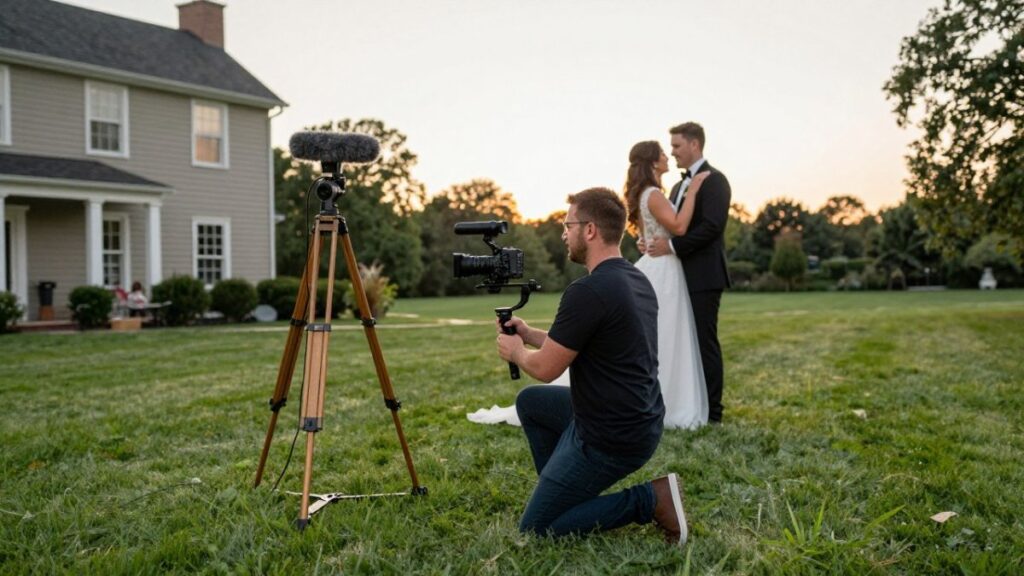
- Documentary wedding videography captures unposed moments as they happen, suiting couples who value candid emotion.
- Cinematic coverage plans composed shots and movement to build a polished, film-like story.
- Narrative, minimal and editorial are the three main editing styles, and they can be combined within one film.
- Ask how ceremony audio is captured, since camera-mounted sound can miss the vows.
- Write a one-page brief covering filming style, editing, deliverables, audio and delivery before consulting a videographer.
Table of Contents
- Filming Style, Editing Style, and Deliverable Format: Three Separate Decisions
- The Main Wedding Videography Styles Compared
- Documentary Style Wedding Videography: Filming the Day as It Happens
- Cinematic Wedding Videography: Composed Shots and Film-Like Storytelling
- Wedding Video Editing Styles and the Editing Workflow
- Wedding Highlight Video Length: How Long Should Each Film Be?
- Choosing a Style: A Questionnaire for Couples and Your Videographer
- Booking Your Wedding Video With 1021 Events
- Frequently Asked Questions
Filming styles, editing styles and deliverable formats are three separate decisions, and most couples only discover that after booking. Settling each one early keeps your videographer’s quote, coverage and final film aligned. At 1021 Events, we coordinate video alongside photography, DJ and lighting for weddings across Southern Wisconsin and Northern Illinois.
Wedding videography styles describe how the day is filmed: documentary, cinematic or traditional. Understanding how editing time, deliverables and package options affect what you pay can help you weigh these choices early.
Filming Style, Editing Style, and Deliverable Format: Three Separate Decisions
Treat these as three questions rather than one package. Ask how the day should be captured, how the story should be shaped in the edit, and how long the final product should run. Couples who answer all three in writing tend to receive films that match what they imagined.
A practical starting point:
- Filming style: documentary, cinematic or traditional
- Editing style: narrative, minimal or editorial
- Deliverable format: full-length film, highlight reel, teaser, or raw footage
The Main Wedding Videography Styles Compared
Most wedding films fall into a few recognizable approaches. Documentary coverage follows events as they unfold. Our comparison of camera features for low-light and cinematic coverage shows which equipment supports each look. Cinematic coverage plans composed shots and builds a film-like arc. Traditional coverage records the ceremony and key moments in a more straightforward, record-keeping way. Many productions blend elements of more than one.
| Style | How It Is Filmed | Best For |
|---|---|---|
| Documentary | Handheld, unposed, follows the day | Couples who value candid emotion |
| Cinematic | Composed shots, movement, planned angles | Couples wanting a polished, film-like result |
| Traditional | Steady framing, key moments captured | Families who want a clear record of events |
Documentary Style Wedding Videography: Filming the Day as It Happens
Documentary style wedding videography captures moments without directing them. The videographer moves through the room, watches for reactions and records speeches, laughter and quiet exchanges as they happen.
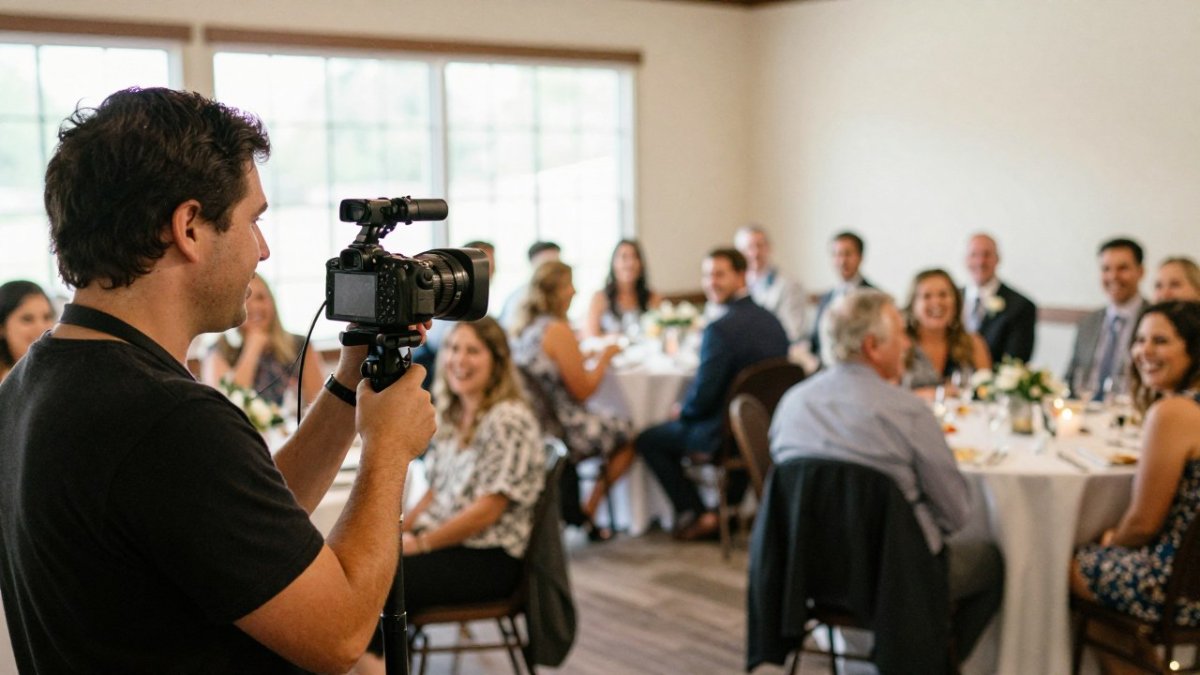
Watch out: documentary coverage depends on a videographer who anticipates moments rather than chasing them. You can also review practical wedding videography tips for coverage, audio and shot priorities before that conversation.
Cinematic Wedding Videography: Composed Shots and Film-Like Storytelling
Cinematic coverage plans shots in advance, using movement, slow motion and carefully chosen angles to build a story. It usually asks for more setup time and more deliberate direction during the ceremony and portraits. Couples who want their film to feel like a short movie tend to prefer this approach.
Wedding Video Editing Styles and the Editing Workflow
Editing is where filming style and deliverable format get reconciled. The same documentary footage can become a restrained narrative film or a fast, stylized highlight depending on the edit. Treat editing style as its own decision, separate from how the day was filmed.
The three editing styles most couples encounter:
- Narrative edit: Follows the chronology of the day and lets recorded audio, vows, speeches, toasts, carry the story. Cuts are motivated by what is being said, not by the music. Best when the couple wants to hear the day, not just see it.
- Minimal edit: Long takes, simple cuts, little or no music under dialogue, restrained color. The footage is allowed to breathe. Best when the couple trusts the raw material and wants a record rather than a produced film.
- Editorial edit: Stylized transitions, speed ramps, matched color treatments, and music-driven pacing. The edit itself becomes part of the visual signature. Best when the couple wants a shareable, designed-feeling film and is comfortable with less raw audio.
These are not mutually exclusive. A common pattern is a narrative ceremony section followed by an editorial reception highlight, joined by a short montage.
Before-and-after: how the same footage changes
Concrete examples make the labels easier to compare. Consider the same three moments, the first look, the vows, and the first dance, cut three ways:
| Moment | Narrative edit | Minimal edit | Editorial edit |
|---|---|---|---|
| First look | Real-time reaction with ambient room sound, cut to the partner’s face | One continuous take, no music, natural audio | Slow-motion turn, music swell, color grade shift |
| Vows | Full audio of the vows over close shots of hands and faces | Uncut ceremony audio with a wide shot | Short vow excerpt under a montage of guest reactions |
| First dance | Live band or DJ audio with cutaways to family | Single wide shot, full song | Speed-ramped spins, beat-matched cuts, stylized transitions |
When you review a videographer’s samples, ask which of these three treatments each sample uses. A reel that looks cinematic may be an editorial edit of documentary footage, which is a different promise than a cinematic filming style.
The editing workflow, step by step
A typical edit runs in this order, and each step has a decision the couple can influence:
- Ingest and sort. All footage is backed up and logged by moment, prep, ceremony, portraits, reception. Ask how many hours of raw footage the day is expected to produce; a two-camera, ten-hour day commonly yields many hours of source material, which affects editing time and therefore price.
- Select audio first. Vows, speeches, and toasts are pulled and cleaned before any visual cut is made. Audio drives the story structure in a narrative edit. Confirm whether the videographer uses a separate recorder on the officiant’s microphone or a lavalier on the groom, because camera-mounted audio alone can pick up room noise instead of voices.
- Build the rough cut. The story structure is laid down, chronological, thematic, or a hybrid. This is the stage where a couple’s answers to the style questionnaire actually get applied.
- Refine pacing and sound design. Music is placed, ambient sound (applause, laughter, the room tone of the ceremony) is layered under visuals, and transitions are chosen. Pacing decisions here determine whether the film feels energetic or calm.
- Color grade. Footage is matched across cameras and graded to a consistent look. Ask whether the grade is included or an add-on; some packages quote a flat edit and charge separately for a stylized grade.
- Review and revise. Confirm how many rounds of revisions are included and what counts as a revision, trimming a section is different from re-cutting the story structure.
- Export and deliver. Final files are exported in the agreed formats and resolutions. Confirm the codec and resolution before delivery, because a file that plays on a laptop may not play on a venue’s projector.
Watch out: if the videographer cannot tell you how ceremony audio is captured and whether it is synced in the edit, the most emotionally important part of the film is at risk regardless of how good the visuals look.
Pacing, music, and sound design choices
Pacing is the single biggest lever on how a film feels. Faster cuts suit receptions and high-energy moments; longer shots suit vows and first looks, where the audience needs time to read a face.
Music selection involves two separate questions: the tone you want, and the licensing that allows the film to be shared. Commercial songs are usually licensed for personal use only, which can limit public posting; many videographers use licensed library music for anything intended for social media. Ask which applies to your film before assuming a favorite song can be used.
Sound design is the layer most couples do not think to ask about. Ambient audio, applause, laughter, the room tone of the ceremony, is what makes a film feel present rather than silent.
Wedding Highlight Video Length: How Long Should Each Film Be?
Length depends on purpose. A highlight film is typically short enough to watch in one sitting, while a full-length film preserves more of the ceremony and reception. Many couples order both: a full film for keeping and a shorter highlight for sharing. Ask your videographer what length each package includes before comparing prices.
Choosing a Style: A Questionnaire for Couples and Your Videographer
Most style guides stop at “pick what feels right.” A more useful approach is a short decision tree that turns preferences into a written brief your videographer can quote and shoot against. The questions below are ordered so each answer narrows the next.
Step 1: Decide what the film is for
- To relive the day: lean documentary filming with a narrative edit and a full-length deliverable.
- To share with people who were not there: lean cinematic filming with an editorial edit and a highlight reel.
- To keep as a family record: lean traditional filming with a minimal edit and a full-length deliverable, plus raw footage archived.
If the answer is “all three,” that is normal, it usually means two deliverables (a full film and a highlight), not one compromised film.
Step 2: Decide how much audio matters
- Vows and speeches are the priority: require a separate audio recorder and confirm it in the contract.
- Music and visuals are the priority: an editorial edit with licensed music is a better fit than a dialogue-driven narrative.
- Both: ask for a narrative ceremony section and an editorial reception section in the same film.
Step 3: Decide on coverage and crew size
- One videographer can cover a ceremony and key moments but will miss simultaneous action, reactions during the ceremony while also capturing the couple.
- Two videographers allow one to hold a wide shot while the other moves for reactions, which matters most during vows and the first look.
- Three or more is usually reserved for large venues or multi-location days.
Ask how the crew coordinates with the photographer. Video and photo crews competing for the same angle is one of the most common causes of missed moments.
Step 4: Decide on delivery and access
- Format: confirm resolution (1080p vs. 4K), file type, and whether files are delivered by download link, USB, or cloud folder.
- Download window: many videographers host final files for a limited period. Ask how long the link stays live and download the files to your own storage immediately.
- Captions and accessibility: if the film will be shared with older relatives or posted publicly, ask whether captions can be added for spoken audio. This is rarely offered by default and is worth requesting at booking.
Step 5: Turn the answers into a one-page brief
Write a short brief and send it before the consultation. A workable template:
- Filming style: ______
- Editing style: ______
- Deliverables: ______ (length and format)
Bring the brief to the consultation and ask the videographer to show past work that matches each line. A videographer who can point to a specific film for each choice is a better fit than one who answers every question with “we customize everything.”
Watch out: a brief that lists a style label without the audio, crew, and delivery details leaves the videographer to fill in the gaps, and the gaps are where quotes and expectations diverge.
Booking Your Wedding Video With 1021 Events
When you are ready to compare options, our wedding videography team can walk you through style, editing and delivery choices for your date and venue. You can also find a local event videographer serving Wisconsin and Northern Illinois to get started. Pricing depends on coverage hours, the number of cameras, audio capture, editing time and the deliverables you choose, so request a quote for your specific day from our website.
Frequently Asked Questions
What is the 30-5 minute rule for weddings?
The 30-5 rule is a timing guideline for wedding photography and videography: plan about 30 minutes of coverage for the formal portraits and key moments before the ceremony, and about 5 minutes of transition time between major events, so the schedule stays realistic. It matters because couples often underestimate how long posed group shots and family portraits take. Building this buffer into your timeline protects the moments you most want captured. Your videographer can help map the buffers against your ceremony and reception schedule.
What are the different styles of wedding videography?
The main styles are traditional, documentary, cinematic, and editorial or alternative. Traditional coverage tends to be more structured, with set shots of the ceremony and speeches. Documentary style focuses on candid, unposed footage of the day as it unfolds. Cinematic style emphasizes composed shots, color grading, and film-like storytelling. Editorial and alternative styles experiment with unusual framing, transitions, and visual tone. Many couples blend two styles, such as documentary coverage with a cinematic final edit.
What is the difference between cinematic and documentary wedding videography?
Documentary wedding videography captures real moments as they happen, with minimal direction and a natural, observational feel. Cinematic wedding videography uses more deliberate camera movement, composed wide shots, and stylized color grading to create a film-like look. Documentary work tends to prioritize authenticity and emotion in unscripted moments, while cinematic work prioritizes visual polish. Some videographers combine both approaches, filming candidly and then shaping the footage into a cinematic edit.
What editing software do wedding videographers use?
Wedding videographers commonly use professional nonlinear editing programs such as Adobe Premiere Pro, Final Cut Pro, and DaVinci Resolve, which handle multi-camera sequences, color grading, and audio mixing. The choice of software matters less than the editing workflow behind it: organizing footage, building a rough cut, refining pacing, and finishing the color and sound. Ask prospective videographers about their editing process and how they handle raw footage and final delivery.
How long should a wedding highlight video be?
A highlight video is usually much shorter than a full-length film, long enough to tell the story of the day without losing viewers. Full-length films document the ceremony and reception in more depth. A short teaser film is useful for sharing on social media. The right length depends on how much of the day you want to rewatch and how you plan to share the video with family and friends.
How can you help your wedding videographer understand your preferred style?
Share examples of films you love, and explain what you like about them, such as the pacing, the music, or the way the color looks. Discuss which moments matter most, whether that is the vows, the speeches, or the candid reactions of your guests. Tell your videographer how you want the final video to feel, whether emotional, playful, or elegant. A short planning conversation and a shot list of must-have moments give your videographer a clear target on the day of the wedding.
What should couples look for in a wedding video editing style?
Look at complete sample films rather than only highlight reels, since full edits show how a videographer handles pacing, transitions, music, and sound. Pay attention to whether the editing feels natural to the day or heavy-handed. Ask how much control you have over music choices and whether ambient audio like speeches and vows is preserved. Clear answers about raw footage, delivery formats, and revisions also help you judge how a videographer will work with you.
Does 1021 Events offer videography as part of an all-in-one wedding package?
1021 Events provides videography alongside DJ and MC services, photography, lighting, planning, and officiating, all coordinated by one team across Southern Wisconsin and Northern Illinois. Pricing depends on the date, coverage hours, and deliverables, so the best next step is to visit the 1021 Events website or request a quote for your specific wedding. Discussing your preferred style and highlight video length early helps the team plan coverage accordingly.
