
Last Updated: November 14, 2026
Quick Summary
To find authentic wedding photography, review a complete recent gallery from one wedding rather than a highlight reel, and confirm the person who shot it is the one you will hire. Check coverage across the whole day, consistency across lighting conditions, and the ratio of candid to posed images.
- Ask for a complete gallery from a recent wedding similar to yours in venue, guest count, and time of day.
- Check whether all portfolio images were shot by the person you are hiring or by associates.
- Run three to five portfolio images through a reverse image search to spot misattributed work.
- Request a few unedited or lightly edited files to see how much the final look depends on post-processing.
- Treat a gallery of only 100 to 150 images as possibly a second highlight reel, not a full delivery.
Table of Contents
- Why Authentic Wedding Photography Is Harder to Spot Than It Looks
- Start With Your Preferred Style: Documentary, Posed, or Editorial
- Review the Full Gallery, Not the Highlight Reel
- Verify Portfolio Ownership, Retouching, and Image Provenance
- Compare the Types of Wedding Photography Packages
- Questions to Ask a Wedding Photographer Before You Book
- Booking Your Photographer With 1021 Events
- Frequently Asked Questions
Why Authentic Wedding Photography Is Harder to Spot Than It Looks
Finding authentic wedding photography starts with knowing that a stunning portfolio does not always mean the photographer captured real moments. Many portfolios are curated, heavily edited, or built from a few carefully staged sessions. Many couples prefer natural, unposed, documentary-style photography, yet many struggle to tell that style apart from polished imitations.
This matters because your wedding photos are the one part of the day you keep forever. Guests forget who was on the dance floor. The photos remember it for you.
A common mistake is judging a photographer only by their best images. Those images show what the photographer can do under ideal conditions, not what you will get on your own wedding day. Authenticity shows up in consistency across an entire event, and that takes a bit more digging to confirm.
Start With Your Preferred Style: Documentary, Posed, or Editorial
Before you search for a photographer, decide what kind of images you want. Documentary photography records events as they unfold, with minimal direction. Posed photography relies on planned portraits and group shots. Editorial photography uses a more styled, magazine-like look with intentional composition and lighting.
Each style has trade-offs. Documentary work tends to produce candid emotion but fewer formal portraits. Posed work guarantees family groupings but can feel stiff. Editorial work looks striking but may take more time and planning.
| Style | What You Get | Best For | Watch Out For |
|---|---|---|---|
| Documentary | Candid moments, natural emotion | Couples who value storytelling | Fewer structured family group shots |
| Posed | Planned portraits, formal groupings | Traditional celebrations | Stiffer, less spontaneous images |
| Editorial | Styled, cohesive visual look | Couples who want an art-directed feel | Can feel staged or less personal |
Knowing your preferred style helps you spot whether a portfolio matches what you actually want. A documentary photographer whose portfolio is full of posed shots may not deliver the candid coverage you expect.
Review the Full Gallery, Not the Highlight Reel
A highlight reel is a portfolio’s greatest-hits album: 20 to 30 images pulled from many weddings, usually the ones shot in beautiful light at the most photogenic venues. For practical guidance on what strong shot selection and timing look like, see event photography tips.
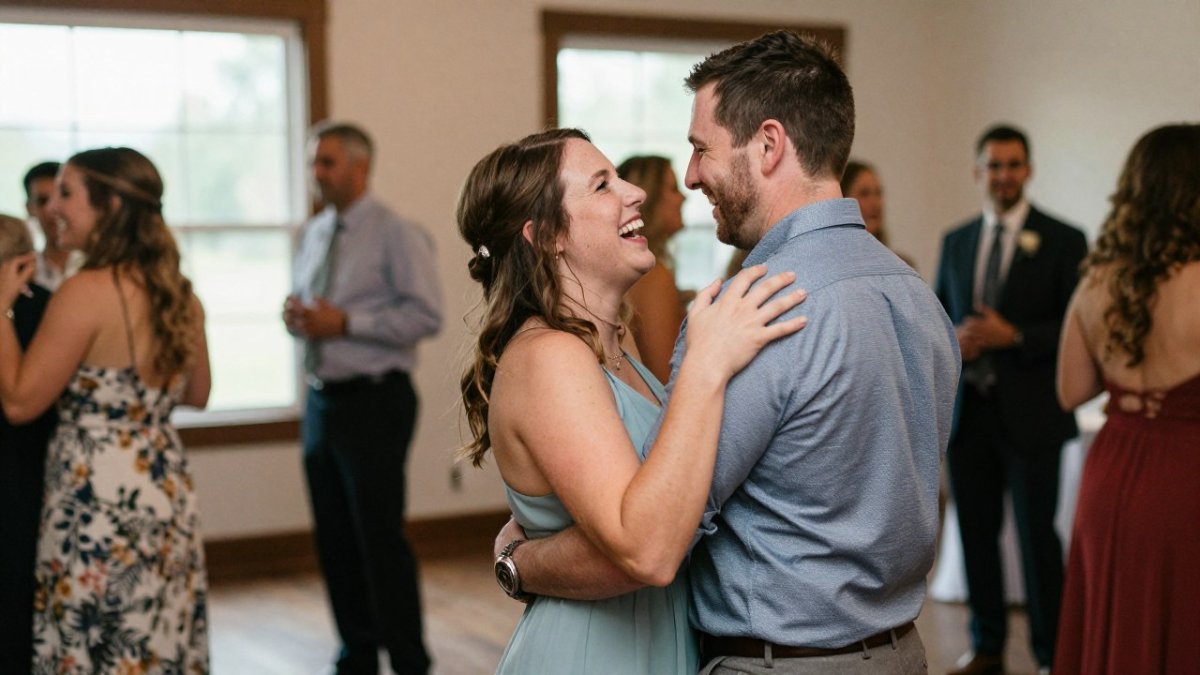
Ask for a gallery from a wedding within the last 12 months that resembles yours in venue type, guest count, and time of day. Then walk through it in this order.
1. Scan the whole day for coverage gaps. Start at the first image and page through to the last without stopping.
2. Check consistency across lighting conditions. Sort the gallery mentally into three buckets: daylight, ceremony and portrait light, and low-light reception. Within each bucket, ask whether color, contrast, and skin tones stay consistent.
3. Look at the difficult moments, not the easy ones. The most revealing images are the ones photographers cannot stage: a tearful parent during a toast, a crowded dance floor at 10 p.m., a dimly lit first dance, a candid reaction in the back row.
4. Count the candid-to-posed ratio. Roughly tally how many images look unposed versus directed. If you want documentary coverage, the gallery should be dominated by moments the subjects did not know were being photographed.
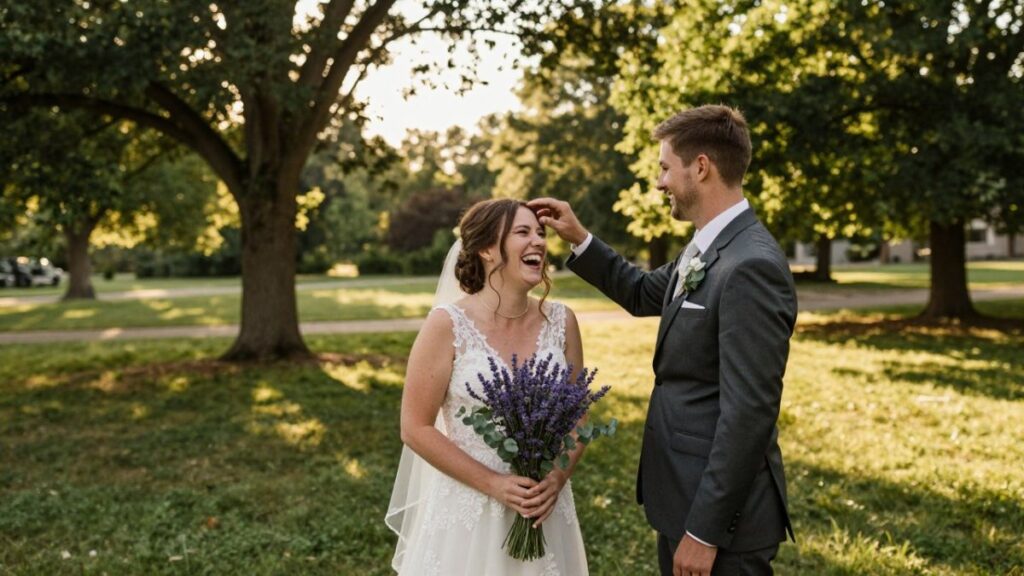
5. Look for believable moments. Authentic images tend to show imperfect, unguarded expressions: mid-laugh, mid-bite, a hand reaching for another hand, a guest caught off guard. Staged images tend to show people looking at the camera, repeating a pose, or arranged in a way that feels composed.
6. Check the endings. Look at the last hour of the gallery. Many photographers front-load their delivery with the strongest images and let the final hour thin out. A gallery that stays strong through the send-off suggests the photographer works the whole event, not just the highlight-friendly parts.
If a photographer will not share a complete recent gallery, that is a meaningful data point on its own. Most established wedding photographers can point to a recent couple who consented to share their full gallery for portfolio review.
Verify Portfolio Ownership, Retouching, and Image Provenance
A portfolio is a marketing document, and not every image in it was necessarily created by the person you are hiring. Some studios display work shot by associates or second shooters. Some portfolios include workshop images, styled shoots, or photos taken at industry events rather than real weddings.
Confirm who pressed the shutter. Ask directly: “Were all the images in this portfolio shot by you personally, or were some shot by associates or second shooters?” If the answer is “our team,” ask which images are yours and whether the person who will photograph my wedding is the same person whose work I am reviewing.
Run a reverse image search. Pick three to five portfolio images, ideally a mix of a portrait, a ceremony frame, and a detail shot, and run them through a reverse image search such as Google Images or TinEye. You are looking for two things: the same image appearing under a different photographer’s name, and the same image appearing on stock or workshop sites. A single match can be innocent (a venue reposting a photographer’s work), but multiple matches under different names are a warning sign.
Ask for unedited or lightly edited files. Request a small set of straight-out-of-camera or lightly edited files from a recent wedding alongside the finished versions. This shows you how much of the final look comes from the camera and how much comes from post-processing. Most photographers will share a handful of these for portfolio review; a refusal to show any unedited work is worth noting.
Ask how much retouching is standard. Retouching ranges from basic color and exposure correction to skin smoothing, background replacement, and composite work. Ask what is included in the package, what costs extra, and whether the same level of retouching is applied to every image in the gallery or only to selected images.
Ask about AI and generative editing. This is a newer question, and it is worth asking plainly: “Do you use AI tools in editing, and if so, for what?” Some photographers use AI for noise reduction, culling assistance, or object removal; others avoid it entirely.
Check the details that are hard to fake. Authentic wedding work usually contains small, specific evidence: the same venue appearing across multiple images with consistent architecture, guests appearing in several frames, details that match the couple’s real wedding (a specific dress, a specific cake, a specific table setting).
Watch out: a photographer who becomes defensive or evasive when asked who shot a specific image, or who cannot explain where a portfolio wedding took place, is giving you information, treat vague answers as a reason to keep looking.
These checks are not about catching anyone. They are about confirming that the work you are admiring is the work you will receive, shot by the person you are hiring, edited in a way you are comfortable with.
Compare the Types of Wedding Photography Packages
Packages vary in coverage hours, number of edited images, turnaround time, and whether a second photographer is included. Pricing depends on the photographer’s experience, the date, the number of hours, and what the package delivers, so ask each photographer for a written quote rather than relying on published estimates.
Compare packages on these points:
- Hours of coverage, from getting ready through the first dance
- Number of fully edited images delivered
- Turnaround time before you receive the gallery
- Whether a second photographer and backup equipment are included
- Image usage rights and whether you can print or share freely
A package with fewer hours but a second shooter may capture more candid moments than a longer solo package. Compare what each package actually includes, not only the headline price.
Questions to Ask a Wedding Photographer Before You Book
A short interview reveals a lot about authenticity and fit. Ask:
- Can I see a complete gallery from one recent wedding, not just highlights?
- Were all the portfolio images shot by you or your team?
- How much retouching is included, and is it consistent across the gallery?
- What is your approach to candid versus posed moments during the day?
- Will you be my only photographer, or will a second shooter be on site?
- What backup equipment do you bring?
- How long until I receive the edited gallery?
- Who owns the image rights, and can we print or share the photos?
Pay attention to how clearly the photographer answers. Vague or evasive answers are a warning sign. Strong communication and personal rapport also matter, since you will spend a full day with this person.
Booking Your Photographer With 1021 Events
At 1021 Events, we have more than 25 years of experience producing weddings across Southern Wisconsin and Northern Illinois. We offer photography and videography as part of a coordinated event team, so the photographer works alongside our DJ, planning, and day-of coordination. If you want to see how we capture a full event, our event photography and videography services describe what is included.
Before you book, review our event photography guide to understand what professional coverage involves. You can also look through our event portfolio examples to judge our work for yourself, and our photo booth and DJ packages if you want to combine services. For a current quote tailored to your date and venue, contact our team directly, since pricing depends on your specific needs.
Frequently Asked Questions
What is the best way to find a wedding photographer?
Start with referrals from recently married couples, venues, and planners who have worked with photographers in your area, then narrow the list by reviewing full galleries from actual weddings. Recommendations tell you how a photographer treats clients and guests, while full galleries show whether their candid work holds up across a whole day, not just in a few highlight images. Shortlist three to five photographers, then compare their style, availability, and communication before you request a consultation. Expect pricing to vary with hours of coverage, number of edited images, and delivery timelines, so request a written quote for your specific date and needs.
How can you tell if wedding photography feels authentic?
Look for images where guests are unaware of the camera or responding to something real, such as a speech, a joke, or a tearful moment. Authentic work usually shows consistent color, lighting, and editing across an entire gallery, not just a handful of standout frames. Be cautious of portfolios that show only heavily retouched or repetitive poses, and ask the photographer directly how much of their editing is applied to every image. Reviewing a complete wedding gallery from a full day gives you the clearest picture of how they actually shoot.
What questions should you ask a wedding photographer before booking?
Ask whether they will be the only photographer on the day and whether a second shooter is included, since that affects coverage of getting-ready moments and the ceremony. Confirm the number of edited images you will receive, the turnaround time, and who owns the image rights and whether you can reproduce them. Ask how they handle low-light reception settings and what backup equipment they carry. Request a sample full gallery from a comparable wedding and a clear written contract that explains cancellation and rescheduling terms.
What is the difference between candid and documentary wedding photography?
Candid photography captures people unposed, often in the moment, while documentary photography tells the story of the day as it unfolds, usually with minimal staging. Many photographers blend both, using brief posed portraits for family groups and couples alongside observational coverage of the ceremony and reception. When evaluating authenticity, check whether the candid images in a portfolio show genuine emotion across the whole day. If a photographer’s style leans heavily documentary, confirm that their package still includes the posed portraits you want.
