
Quick Summary
A wedding DJ and MC package bundles music and master-of-ceremonies duties under one provider, so couples work with a single contract and a single point of contact. It typically covers ceremony audio, cocktail-hour music, reception DJing, and emceeing for announcements and introductions. Compare inclusions line by line to confirm emceeing is actually covered.
- Bundling the DJ and emcee roles gives you one contract and one point of contact.
- Confirm who will hold the microphone on the day, since DJs often switch between mic and laptop.
- Package tier names like Gold or Premium tell you little, so compare line-by-line checklists.
- Low quotes excluding ceremony audio or a second staff member can cost more in total.
- Lock the run sheet eight weeks out and send it to all vendors by four weeks out.
Table of Contents
- What a Wedding DJ and MC Package Includes
- DJ and MC Roles: How They Differ and Overlap
- Benefits of Combining Music and Emceeing Under One Provider
- Wedding DJ Package Inclusions to Compare
- Building a Wedding MC Script and Reception Timeline
- Questions to Ask a Wedding DJ Before You Book
- Booking Your Wedding DJ and MC Team for Your Day
- Frequently Asked Questions
What a Wedding DJ and MC Package Includes
A wedding DJ and MC package bundles music and master-of-ceremonies duties under one provider. Couples usually book it to cover the full reception flow with a single contract and a single point of contact. Packages commonly include ceremony audio, cocktail-hour music, reception DJing, and emceeing for announcements and introductions.
Published package pricing varies widely, and the ranges you see depend on the date, the venue, and the services included. Compare inclusions line by line before assuming a package covers emceeing. At 1021 Events, pricing depends on the date, the venue, and the services you need, so request a quote for current numbers.
DJ and MC Roles: How They Differ and Overlap
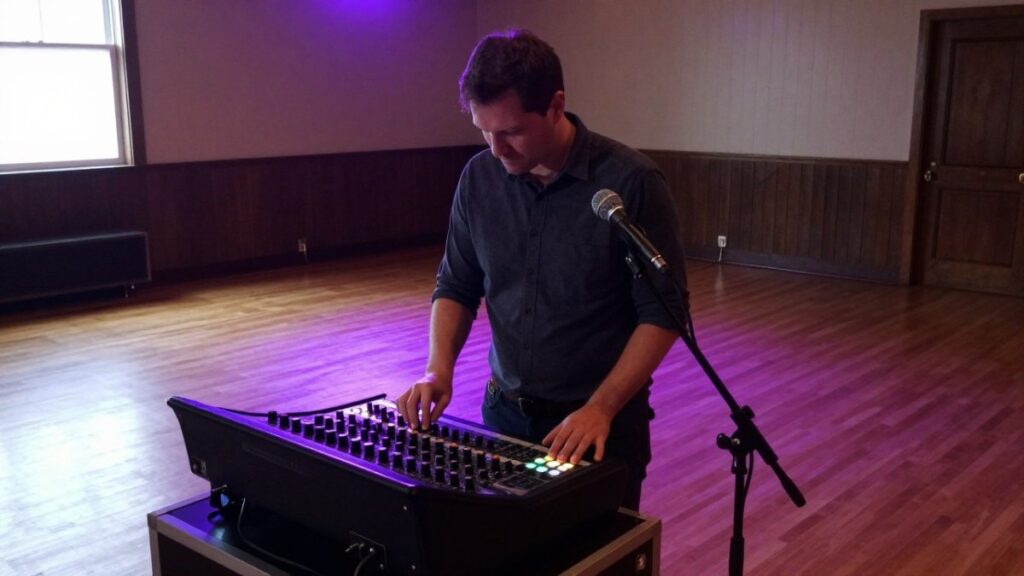
A DJ controls the music. An MC controls the room. A DJ selects songs, manages transitions, and keeps the dance floor moving. An MC introduces the wedding party, cues toasts and speeches, and keeps the schedule on track.
The two roles overlap more than most couples expect. A DJ who also emcees has to switch between a microphone and a laptop, which is where timing problems tend to surface. Ask who will actually hold the microphone on the day.
A DJ and an MC do not have to be the same person. Couples can book a dedicated MC alongside a DJ, but that means two vendors to coordinate. Weigh that cost against the simplicity of one team.
Benefits of Combining Music and Emceeing Under One Provider
Bundling the two roles delivers practical advantages. Here are the most important ones:
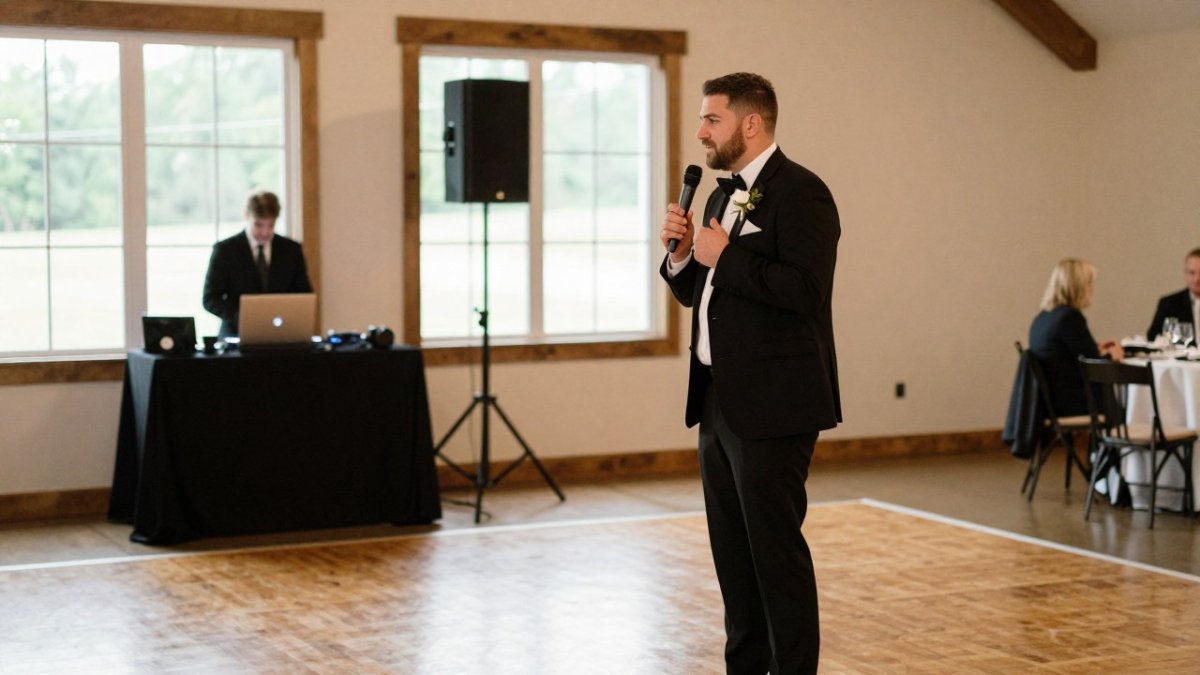
- One contract and one point of contact. You avoid chasing two vendors for the same event.
- Shared timeline knowledge. The person playing music already knows the run sheet, so cues land on time.
- **
- Simpler setup. One sound system and one team reduce equipment conflicts and setup hours.
- Fewer missed moments. The emcee and DJ can adjust the energy together when toasts run long.
- Clear accountability. If something goes wrong, one team owns the outcome.
- Easier budgeting. A single package makes costs easier to compare against other quotes.
Wedding DJ Package Inclusions to Compare
Package labels like “Gold,” “Premium,” or “All-Inclusive” tell you almost nothing. Two providers can use the same tier name and deliver very different events. The only reliable comparison is a line-by-line checklist that separates what is included, what costs extra, and what is simply not offered. Build that checklist before you take a single sales call.
The comparison checklist
For each provider, mark every row as Included, Extra Cost, or Not Offered. Ask for the answer in writing, not verbally.
- Ceremony audio. Wireless microphones for officiant and vows, a separate ceremony sound system, and a dedicated setup and teardown window. Many reception-only packages exclude this entirely.
- Cocktail-hour coverage. Music and a microphone for a separate space, plus the staffing to run it while the reception room is being flipped.
- Reception DJing. Total performance hours, playlist planning meetings, and whether requests and do-not-play lists are honored.
- Emcee services. Introductions, toasts, cake cutting, bouquet and garter, and special dances. Confirm whether the emcee is the same person as the DJ or a second staff member.
- Vendor coordination. Who contacts the venue, photographer, and caterer, and how many planning meetings are included.
- Lighting and effects. Whether lighting is included and what it covers.
- Backup equipment. Whether backup microphones, laptop or controller, and power are provided.
- Overtime terms. The hourly rate, how far in advance you must decide, and whether the rate changes on weekends or holidays.
- Staffing count. One person or two, and whether a second person is billed as an add-on.
- Setup and teardown time. Whether load-in and load-out are billed against your service hours.
What drives the price up or down
Pricing is shaped by several variables, including total service hours, the number of separate sound setups, whether a second staff member is on site, and the date. Lighting, extra microphones, and overtime can push a quote above the advertised package price.
Watch out: a low quote that excludes ceremony audio, cocktail hour, or a second staff member can cost more once those items are added than a higher quote that already bundles them. Compare the total for your actual event, not the headline package price.
How to assess value without defaulting to the cheapest quote
Value is not the lowest number. It is the combination of inclusions, staffing, equipment quality, and planning support you actually receive. Ask each provider to itemize the quote so you can see what you are paying for, and compare the itemized totals side by side rather than the package labels.
Contract terms to confirm
Before signing, confirm the deposit amount and refund schedule, the cancellation and rescheduling policy, the overtime rate, and who the day-of contact will be. Get the name of the specific DJ and emcee assigned to your date in writing, along with the backup plan if that person is ill or unavailable. These terms matter more than the tier name on the brochure.
Use this checklist to compare what each provider actually includes, line by line.
| Inclusion | What to confirm | Watch for |
|---|---|---|
| Ceremony audio | Wireless mics and separate setup window | Often excluded from reception-only packages |
| Cocktail-hour coverage | Music and mic for a separate space | Needs staffing while the room is flipped |
| Reception DJing | Total performance hours and playlist meetings | Whether requests and do-not-play lists are honored |
| Emcee services | Introductions, toasts, cake cutting | Whether the emcee is the DJ or a second person |
| Overtime terms | Hourly rate and decision deadline | Rate may change on weekends or holidays |
| Staffing count | One person or two | A second person may be billed as an add-on |
| Setup and teardown | Whether load-in and load-out count toward service hours | Can quietly reduce paid performance time |
Building a Wedding MC Script and Reception Timeline
A strong reception runs on a timeline, and the MC script follows it. The most useful thing you can do is turn the general advice into a working run sheet with real times, real cues, and real deadlines. Below is a sample sequence and a planning workflow you can adapt.
Sample reception run sheet
Times are illustrative; shift them to fit your ceremony and venue rules.
- 4:00 p.m. Guest arrival music begins; MC confirms microphone levels with the venue.
- 4:30 p.m. Ceremony processional; officiant and reader microphones live.
- 5:00 p.m. Cocktail hour music; MC transitions to reception space.
- 6:00 p.m. Grand entrance and wedding party introductions.
- 6:10 p.m. First dance, then parent dances.
- 6:25 p.m. Welcome toast and blessing; dinner service begins.
- 7:15 p.m. Toasts from best man, maid of honor, and hosts.
- 7:45 p.m. Cake cutting and bouquet toss.
- 8:00 p.m. Open dancing; MC cues special dances as needed.
- 10:00 p.m. Last dance and grand exit announcement.
The planning workflow and deadlines
Work backward from the ceremony start time. A common pattern is to lock the run sheet eight weeks out, confirm vendor arrival times four weeks out, and hold a final walkthrough one to two weeks before the date.
- Eight weeks out: List every moment that needs an announcement and assign a target time. Share the draft with your DJ and MC.
- Six weeks out: Finalize the processional, entrance, and special-dance songs, and name a backup song for each key moment.
- Four weeks out: Send the run sheet to the venue, photographer, caterer, and officiant so arrival times and cues align.
- Two weeks out: Hold a planning call to confirm pronunciations of names, the order of toasts, and any do-not-play songs.
- Week of: Confirm the day-of contact, load-in time, and whether the venue requires a sound check before doors open.
Writing the MC script
Build the script around the run sheet, not the other way around. Keep each introduction to one or two sentences, give the emcee a clear cue word for every transition, and note the exact pronunciation of every name. For guidance on choosing processional and entrance music that fits this timeline, see the options below. Leave space for the emcee to read the room; a script that is too tight sounds robotic, and one that is too loose drifts off schedule.
Watch out: if the emcee and DJ are the same person, long announcements can stall the music and drain the dance floor. Build in short music beds under introductions so the energy never drops to silence.
Contingency planning
Build a backup into the run sheet itself. Identify a substitute song for each key moment, and ask the DJ and MC what happens if equipment fails or a VIP arrives late. A run sheet that assumes everything goes perfectly is the one most likely to fall apart.
Questions to Ask a Wedding DJ Before You Book
Before signing, ask potential providers these questions:
- Who will emcee, and is that person the same one playing music?
- What exactly is included in the package, and what costs extra?
- What happens if equipment fails? Is there backup gear?
- How many hours of service are included, and what is the overtime rate?
- Will you meet with us before the wedding to build the timeline?
- How do you handle song requests and do-not-play lists?
- Can you coordinate with our photographer, venue, and other vendors?
- What is your cancellation and refund policy?
Written answers protect you if expectations shift later. Use this wedding DJ question checklist to compare professionals and plan confidently across Southern Wisconsin and Northern Illinois. Keep them with your contract.
Booking Your Wedding DJ and MC Team for Your Day
Start by comparing a few providers in your area. Review their packages, ask for sample timelines, and confirm who will be on-site. Book early, because popular dates fill quickly, especially in peak season.
Once you choose a team, confirm the details in writing: service hours, inclusions, overtime terms, and the day-of contact. Then schedule a planning call to build the run sheet together. You can compare wedding DJ companies near you or read a guide to hiring a wedding DJ before making a decision.
Ready to build your reception around one trusted team? Book now with 1021 Events for professional DJ and MC services that keep your day on schedule.
Frequently Asked Questions
Can one person be both the wedding DJ and MC?
Yes. Many wedding DJs also serve as the MC, handling announcements, introductions, toasts, and timeline cues while controlling the music. The overlap works well when the DJ is comfortable speaking to a crowd and has a clear script. Couples should confirm this directly with the provider, since a combined package does not always mean the same person runs both roles. Ask who will be at the microphone during the ceremony, the reception, and any speeches, and get the answer in writing.
What should a wedding DJ and MC package include?
Check each quote for the specific services included, such as ceremony audio, cocktail-hour music, reception DJing, and MC services. Check whether the quote lists service hours, overtime rates, and backup equipment. Pricing depends on the date, hours, and services you choose, so request a current quote from 1021 Events for your specific wedding.
What are the benefits of hiring a wedding DJ and MC together?
The main benefit is one coordinated team that knows the timeline, the music plan, and the announcement order. That reduces the chance of missed cues, duplicated instructions, or gaps between the music and the program. You also have a single point of contact for changes on the day. The tradeoff is that you rely on one provider, so confirm that the team has experience with weddings of your size and that the MC style suits your crowd.
