Quick Summary
Intelligent lighting for wedding receptions uses programmable LED fixtures that change color, direction, and intensity during the event. A single operator can adjust the whole room in real time, so the lighting matches the toasts, the cake cutting, and the last song.
- Three fixture types do most of the work: moving lights, color washes, and uplighting.
- Build a cue sheet listing each reception moment, its lighting look, trigger, and operator action.
- Load the cocktail-hour base look 30 to 45 minutes before doors open.
- Dim the room to 20 to 40 percent for toasts, cake cutting, and the first dance.
- Warm, steady uplighting usually photographs best; fast beams can blur faces.
Table of Contents
- What Intelligent Lighting Does at a Wedding Reception
- Types of Wedding Lighting and Where Each One Works
- Wedding Lighting Ideas by Reception Moment
- Lighting Plan by Reception Timeline
- Lighting for Reception Photography and Video
- Venue Constraints, Safety, and Guest Comfort
- Renting Wedding Lighting vs. Booking It in a Production Package
- Booking Your Lighting Plan With 1021 Events
- Frequently Asked Questions
What Intelligent Lighting Does at a Wedding Reception
Last Updated: November 10, 2026
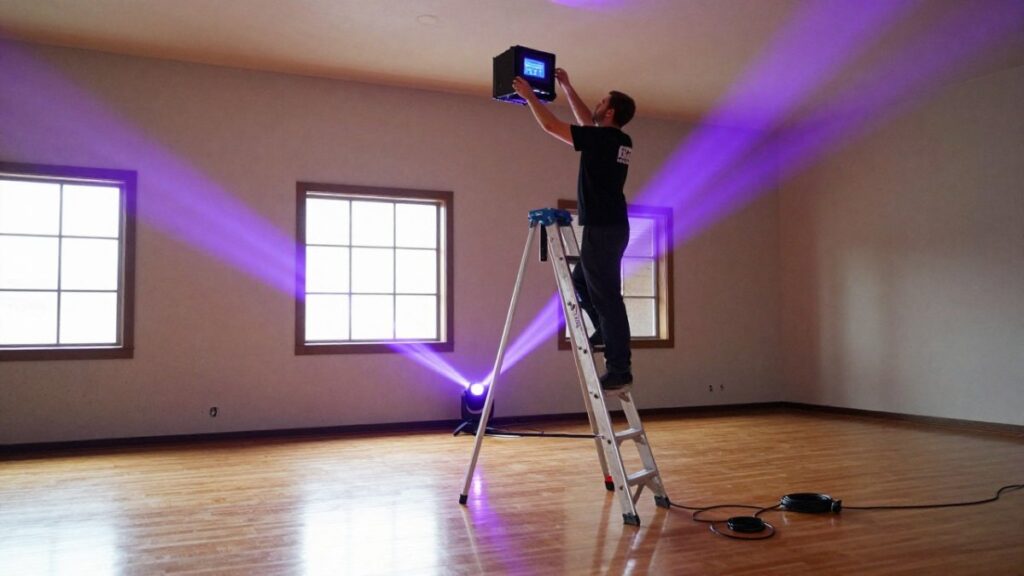
Intelligent lighting for wedding receptions uses programmable LED fixtures that change color, direction, and intensity during the event. Instead of one fixed color, the room can shift from warm amber during dinner to bright moving beams for the first dance.
Most couples picture a dance floor flooded with color, and that is part of it. The bigger payoff is control. A single operator can adjust the whole room in real time, so the lighting matches the toasts, the cake cutting, and the last song.
Moving Lights, Color Washes, and Uplighting Explained
Three types of fixtures do most of the work at a reception.
- Moving lights rotate and tilt to throw beams and patterns across the floor and walls.
- Color washes fill a wall or room with a single even tone.
- Uplighting sits on the floor and points upward to highlight walls, columns, and drapery.
Each one does a different job. Moving lights add energy, washes set a tone, and uplighting adds depth.
Types of Wedding Lighting and Where Each One Works
Different lighting types suit different rooms. Start with the space, then choose the fixtures.
- Uplighting: Best for walls, columns, and tented ceilings. Choose it for almost any reception.
- Moving heads: Best for large open floors. They add motion but need clear sight lines.
- Pin spots: Best for highlighting the cake, head table, or a floral centerpiece.
- String or café lights: Best for outdoor tents and barns. They give warmth but little color range.
Before you book, read more on Wedding Uplighting Colors: Top Picks for Your Dream Day to match colors to your venue and season. For planning placement and coverage, Your Guide to Uplighting for Wedding Reception walks through setup and venue rules.
A common mistake is choosing fixtures by how they look in a photo. Check the room first. Ceiling height, wall color, and power access decide what will work.
Wedding Lighting Ideas by Reception Moment
Lighting should change with each part of the night. Here are simple ideas for common moments.
- Cocktail hour: Soft amber or warm white washes that feel relaxed.
- Grand entrance: A brighter color wash with a quick beam effect.
- First dance: Dim the room and use a single spotlight on the couple.
- Open dancing: Fast color changes and moving beams that follow the music.
- Cake cutting: Pin spots on the cake, with the room dimmed behind it.
For more inspiration, Wedding Reception Lighting: 7 Stunning Ideas covers additional looks you can compare against these.
Lighting Plan by Reception Timeline
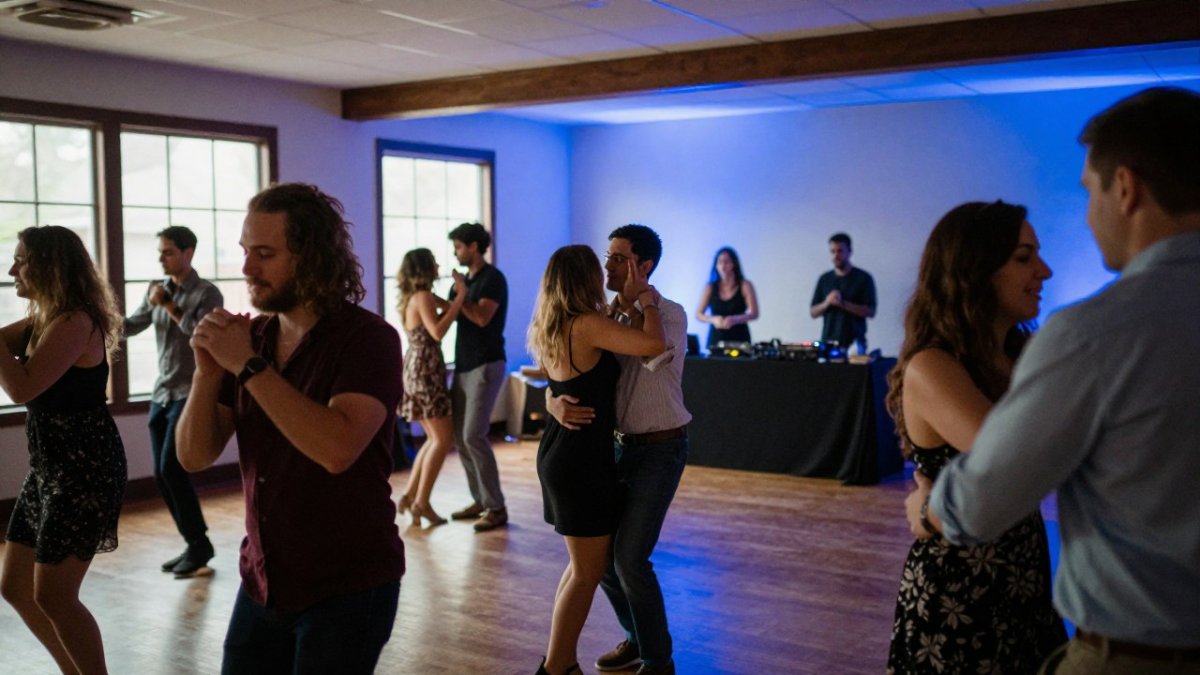
A timeline-based lighting plan turns intelligent lighting from a set of fixtures into a sequence of cues. Build it from the final reception schedule your planner, DJ, and venue share, then work backward so each moment has a look, a trigger, and a person responsible for calling it.
Build the cue sheet
A cue sheet is a one-page table listing each reception moment, the lighting look, the trigger, and the operator action. Keep it in the same document as the DJ’s run of show so the two never drift apart.
| Moment | Look | Trigger | Operator action |
|---|---|---|---|
| Guest arrival and cocktail hour | Warm amber wash at 40-50% intensity, uplights on walls | Doors open | Load base look before first guest enters |
| Guests seated for dinner | Warm white wash at 50-60%, pin spots on head table | Planner calls seating | Raise ambient level, hold color steady |
| Toasts and speeches | Dim room to 30-40%, single spot on speaker | DJ announces first toast | Cut movement, hold spot, mute color changes |
| Cake cutting | Pin spots on cake, room at 25-35% | DJ calls cake cutting | Focus pin spots, dim surrounding wash |
| First dance | Spotlight on couple, room at 20-30%, slow color drift | DJ announces first dance | Cue spot, start slow fade |
| Parent dances | Soft wash at 30-40%, no movement | DJ announces dance | Hold steady, no beams |
| Open dancing | Fast color changes, moving beams, 60-80% intensity | DJ opens dance floor | Switch to dance program |
| Bouquet and garter | Bright wash at 70%, movement paused | DJ announces activity | Pause beams, raise wash |
| Last song | Slow fade to warm amber at 30% | DJ announces last song | Fade over 60-90 seconds |
| Send-off | House lights up, uplights to exit color | Planner calls send-off | Raise ambient, hold exit look |
Set the base look before guests arrive
Load the cocktail-hour look 30 to 45 minutes before doors open. Warm amber or warm white at 40-50% intensity reads as relaxed and photographs well. Uplights on the walls should be on and steady, with no movement. This base look is the reference point every later cue returns to.
Shift to energy when the dance floor opens
The dance-floor cue is the biggest single change of the night. Keep the wash at 60-80% intensity and let moving lights sweep the floor and walls.
Watch out: if the dance-floor cue fires before the photographer finishes formal shots, faces in those photos will carry colored highlights that are hard to correct later.
Cue the key moments
Toasts, cake cutting, first dance, and parent dances each need a distinct look and a clear trigger. The trigger should come from the DJ or planner, not from the lighting operator guessing. Dim the room to 20-40% for these moments, cut movement, and use a single spot or pin spot on the subject. Once the formal dances are finished, carry that same attention to clear subjects and restrained movement into the photo booth, where Socalphotoboothevents can help frame guests against the room’s changing light.
Bring the room back down for the final song
A slow fade over 60 to 90 seconds to warm amber at about 30% gives the last song a deliberate close. Hold that look through the send-off, then raise house lights and set uplights to an exit color. The fade should be programmed in advance, not improvised.
Share the plan early
Changes made the day of take longer than most couples expect, and a cue that is not in the sheet is a cue that will be missed. A short walkthrough on site the day of the event confirms fixture positions, trigger language, and who calls each cue.
Lighting for Reception Photography and Video
Lighting that looks great to guests can wash out photos. Bright, fast-moving beams can blur faces or create harsh spots on skin. Warm, steady uplighting usually photographs best.
Some want the room brighter during formal portraits and dimmer during the dance floor shots. A good plan covers both.
Venue Constraints, Safety, and Guest Comfort
Every venue has limits, and intelligent lighting plans succeed or fail on how well those limits are mapped before the event. Walk the room with the venue contact and the lighting operator, and record the constraints in writing.
Technical constraints to document
- Ceiling height: Low ceilings under about 12 feet limit moving-light throw and can put beams in guests’ eyes. High ceilings in ballrooms and tents may need truss or ground-supported positions rather than ceiling mounts.
- Power access: Confirm the number and location of circuits, the amperage available, and whether the venue requires a separate distro. Ask whether the lighting load can share circuits with the DJ or catering equipment.
- Rigging permissions: Many venues require licensed riggers, prohibit attaching to certain ceiling structures, and require proof of insurance. Get the rigging rules in writing before signing a lighting contract.
- Room dimensions and shape: Long narrow rooms, columns, and divided spaces change where uplights and moving lights should go. A fixture plan drawn to the room’s dimensions prevents coverage gaps.
- Reflective surfaces: Mirrors, glass walls, polished floors, and metallic drapery bounce beams and can create glare or double images. Note them on the plan so the operator can aim fixtures away.
- Restrictions: Some venues ban open flames, haze, or fog, and some restrict where equipment can be placed relative to exits and fire lanes.
Safety points for guests
- Tape down every cable and keep runs out of walkways and dance-floor edges.
- Avoid strobe effects if guests have sensitivity to flashing light, and ask about sensory needs in advance.
- Keep fixtures cool, secured, and out of reach, especially on floor positions near guest tables.
- Leave clear paths to exits even when the room is dimmed, and confirm exit signage stays visible.
Guest comfort
Comfort matters as much as safety. A room that is too dark makes older guests feel unsafe, and a room that is too bright tires everyone out. Aim for a base ambient level that lets guests read a menu and see faces across a table, then use accent and dance-floor lighting for energy. Glare from a badly aimed uplight or moving head is the most common complaint; a site walkthrough with the fixtures on is the best way to catch it before the event.
Coordination and responsibility checklist
Assign each item to a named person so nothing falls between vendors:
- Couple: Approve the cue sheet and confirm sensory or accessibility needs.
- Venue: Provide power, rigging rules, load-in times, and any restrictions in writing.
- DJ: Call the cues and share the run of show.
- Photographer: Flag preferred brightness and colors for formal shots and dance-floor coverage.
- Lighting operator: Program cues, run the show, and carry backup control and spare fixtures.
A short cue-sharing workflow, one shared document, one named caller, one confirmation walkthrough, prevents conflicting lighting, missed moments, and poor photo conditions.
Renting Wedding Lighting vs. Booking It in a Production Package
Couples usually choose between renting equipment and booking lighting as part of a production package.
- Renting gives control but puts setup, timing, and troubleshooting on you.
- A production package bundles lighting with DJ, MC, and coordination, so one team runs the timeline.
Pricing depends on quantity, dates, and delivery, so ask for a current quote rather than relying on estimates. Compare what each option includes, not just the sticker price.
Booking Your Lighting Plan With 1021 Events
Intelligent lighting works best when it is planned alongside the music, timeline, and venue. At 1021 Events, we coordinate lighting with the music and timeline as part of one reception production.
To explore your options, see Uplights for Wedding Reception: Transform Your Venue Today and Wedding DJ Lighting Packages: Create Your Dream Atmosphere. Contact us through our website for current pricing and availability.
Your reception deserves lighting that moves with the night. Plan the look with 1021 Events and let your team handle the details while you enjoy the day. Ask us for a quote on intelligent lighting for your reception.
Frequently Asked Questions
What does intelligent lighting mean for a wedding reception?
Intelligent lighting refers to programmable fixtures, usually LED, that can change color, direction, intensity, and pattern during the event. Instead of one static setup, the lighting can shift from warm candlelight-style tones during dinner to high-energy color and movement for open dancing. Pricing depends on fixture count, coverage area, and crew time, so request a quote through the 1021 Events website for current rates.
How is intelligent lighting different from uplighting?
Uplighting is typically a static fixture placed on the floor that washes walls or columns in one color, and it is a good fit for simple, consistent ambience. Intelligent lighting includes moving heads and programmable fixtures that can sweep, pulse, and change color throughout the night. Many couples use both: uplighting for a steady base and intelligent fixtures for dance-floor energy and special moments like the first dance or the grand entrance.
Can intelligent lighting be coordinated with a DJ and MC?
Yes. When the lighting operator, DJ, and MC work from a shared timeline, lighting cues can be set for the grand entrance, toasts, first dance, and last song.
What should couples ask a lighting provider before booking?
Ask who will operate the lights on the day, how many fixtures are included, whether setup and teardown time is part of the quote, and how the system is synced with music and the timeline. Ask about venue power requirements and rigging limits, and request photos or video of past receptions. Confirm what happens if a fixture fails during the event. Current pricing and availability are available by requesting a quote from 1021 Events.
